Success in the Japanese market necessitates much more than just translating existing marketing collateral. Japan now has more than 100 million LINE users alone — effectively a piece of communication infrastructure — and a platform mix that remains structurally different from the West.[2] The social media landscape in Japan possesses a distinct structure that is truly unique. Although these platforms provide a direct and economical entry point for testing new markets, brands must follow specific cultural protocols and social rules to ensure their campaigns are both profitable and locally resonant.
In my years of observing the domestic market, I have witnessed countless global brands launch high-budget campaigns that disappear into the Japanese web without leaving a trace. These failures occur because the brands attempt to apply universally applicable ways to digital marketing, especially on Social Media where they can talk to their potencial customers directly.
For any business planning to expand into Japan, a superficial glance at data is insufficient.
Success in what we call “SNS (abb. Social Networking Services)” requires an intimate understanding of the complex psychological drivers behind user engagement. You must look past the numbers to see the human faces behind the screens.
This article explores the realities of Japan’s uniquely evolved digital landscape, often described by the term “Galapagosization.” In this guide, I refer to real examples and practical tips to show you how to build lasting trust with Japanese consumers.
Q: Which social media apps are actually popular in Japan right now?
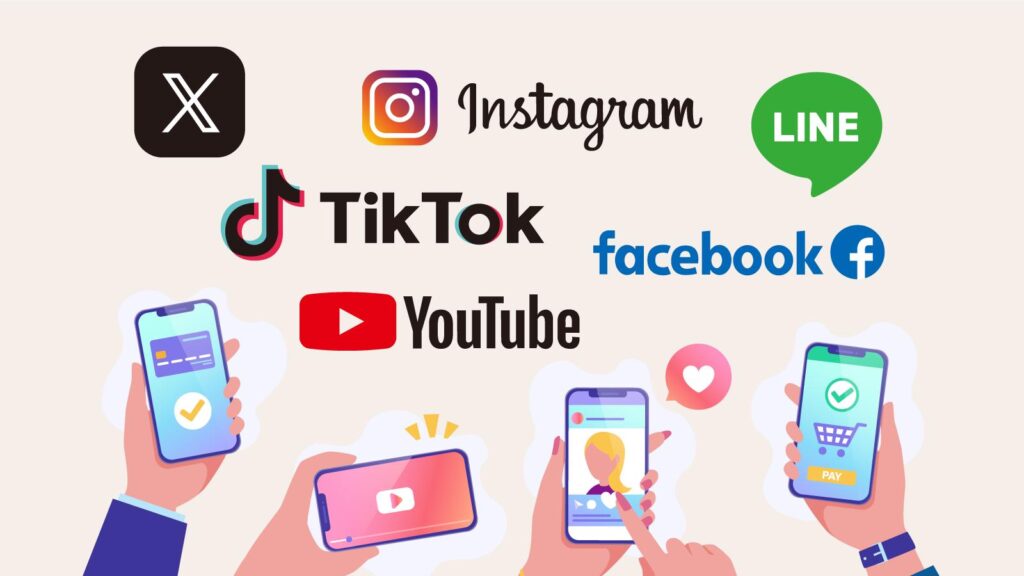
According to the latest 2026 data, the ranking of popular social media platforms in Japan remains stubbornly distinct from the West. However, these numbers only tell half the story. To succeed here, you must understand how these apps have woven themselves into the fabric of Japanese society.
1. LINE (100 million MAU)
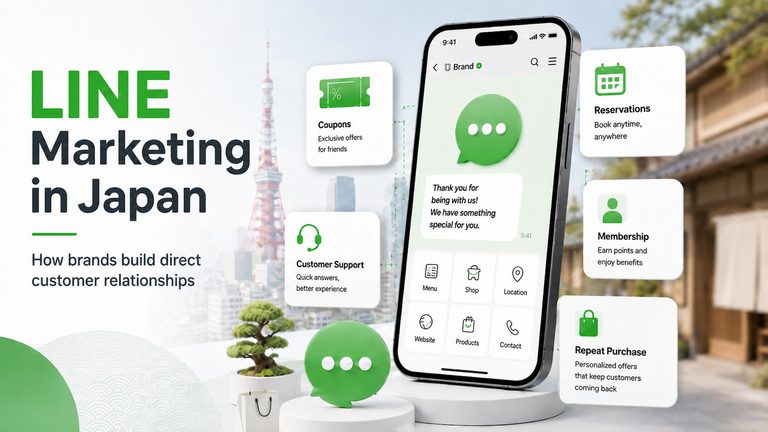
In Japan, LINE is far more than a messaging app. It has become the fundamental operating system of daily life — surpassing 100 million domestic monthly active users at the end of December 2025, equivalent to more than 80% of Japan’s population.[1] It is the place where parents receive school lunch menus and where residents book appointments for local garbage collection. For a business, being on LINE means you are not just a social account. You are a contact in the user’s inner circle.
If your brand is not integrated into this system, you effectively do not exist in the digital environment of a big population of Japanese consumers.
2. YouTube (73.7 million)
YouTube serves as the second largest search engine in Japan. It is the first place people go when they want to verify the reality of a product. Whether a user is looking for a no filter review of a new smartphone or a guide to recipes, they trust video over text. The rise of “YouTube Shorts” has further strengthened this trend. For busy office workers commuting to work, they are useful for gathering information in the morning and are popular as entertainment items to kill time.
3. X (68 million)
Globally, the platform landscape remains fluid, but in Japan, X holds decisive popularity and demand. No other social media platform offers such deep insight into Japanese society and its people.
When a minor earthquake strikes, the phrase “Did you feel it?” instantly trends. People no longer wait for TV news broadcasts that take hours to air. People check X to see what’s happening in real time.
This speed is precisely what fuels conversations in offices and schools. By monitoring the timeline and joining the conversation at the right moment and with the right tone, brands can gain access to consumers’ raw, immediate reactions.
4. Instagram (66 million)
While Google remains popular for general queries, younger Japanese generations now use Instagram to decide where to eat and what to wear. A restaurant without a visually appealing Instagram feed is invisible to the weekend crowd.
Recently, the trend has shifted away from overly polished photos toward “authentic storytelling.” Rather than brands that simply post photos that look like they were taken by commercial photographers, brands that offer glimpses into the making of their products often achieve much higher engagement.
5. TikTok (42 million)
TikTok has experienced explosive growth in Japan. It is no longer just a platform for Gen Z dance videos. Thanks to its highly accurate algorithm, it has evolved into a powerful discovery engine that influences user behavior by matching them with recommended content at a high level.
Q: Can you share some successful examples of brands using “SNS” in Japan?

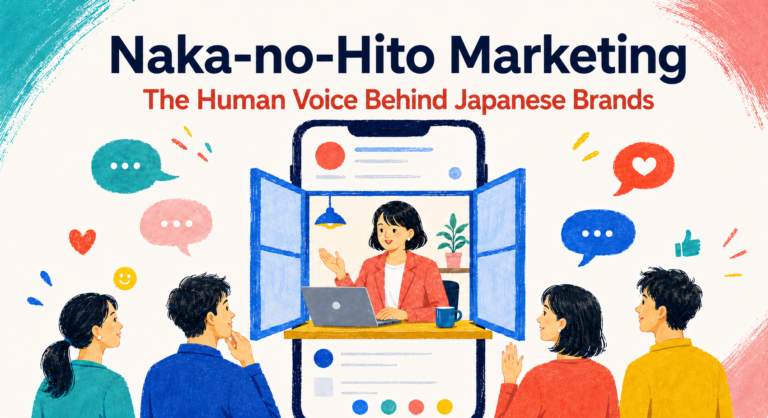
You don’t need a massive budget to go viral in Japan. The secret lies in humanizing your brand and mastering the “Naka-no-hito” (the person inside) persona.
1. I-Wrap (@i_wrap_official): A Model of Fan Engagement
Iwatani Materials’ simple plastic bag “I-Wrap” gained nationwide recognition through X. Rather than corporate advertising, the account manager’s strategy involved picking up niche usage examples from everyday conversations with users.
By actively leveraging User Generated Content (UGC), they transformed everyday items into cult-favorite products. This success proves that in Japan, “approachability” is valued more than “sophistication.”
2. Hokuoh Kurashi (@hokuoh_kurashi) : Selling a “Worldview”
Hokuoh Kurashi represents the pinnacle of curated e-commerce. Their strategy lies not in selling products, but in selling a “worldview.”
By consistently offering aesthetic content that resonates with customers’ ideal daily lives, they have built a loyal community. Customers aren’t just buying products; they’re buying into the story depicted on the feed.
In today’s Japan, a brand’s value isn’t determined just by performance. The key is whether it has a compelling story that resonates with users, making them want to be part of that world.
Take, for example, BALMUDA’s wildly popular toaster. It succeeded in sharing a relatable experience. “Transforming your ordinary morning into a special time with the most delicious toast.” It transformed consumers into protagonists of their own story, enjoying a life of care and attention.
In this way, it’s important not to sell based on technical specs, but to increase the number of allies for the company through storytelling. The key isn’t just selling products, but delivering a comfortable worldview that makes people want to step into it.
Q: What are the biggest cultural nuances global brands often miss?
On Japanese social media, the two most important points are users’ strong preference for anonymity and their high preference for context.
Anonymous Culture and Why Japanese People Speak Freely on X
Unlike the real name culture prevalent on platforms like Facebook in the West, Japanese social media users prefer pseudonyms. This isn’t just about shyness. They cherish this space as the only place where they can shed daily pretense and speak their true minds.
This trend stems from the desire among Japanese people to separate their outward attitudes (tatemae) from their true feelings (honne) in everyday communication. That’s why X, where users can employ pseudonyms, has become the primary platform for expressing honne in Japan.
Especially in Japan, a nation prone to disasters, X functions as a “digital lifeline.” As seen during the Noto Peninsula earthquake in early 2024, when disaster strikes, Japanese people turn to X before news programs to seek raw, unfiltered information.
This demand can even crash servers. Companies must navigate this space where raw honesty gathers, proving their sincerity.
High-Context Communication and The Unspoken Rule of “Reading the Air”
Japanese people are masters at reading the air. Even on social media timelines, they keenly sense the nuances behind words. That’s precisely why pushy advertising is instantly dismissed as annoying noise.
For example, posting cheerful content immediately after major social issues or tragic news breaks can lead to fatal brand damage. You must judge whether this is the right time to say this, imagine the temperature on the other side of the screen, and prevent social media backlash.
By demonstrating an ability to “read the air,” brands earn a level of respect and loyalty never achievable through direct advertising. As an example, this includes adjusting tone during socially sensitive periods regarding a specific topic or holidays.
Q: How should a strategy change based on the platform?
To succeed in Japan’s “Galapagosized” digital market, global brands must transition from broadcasting messages to participating in specific social contexts. Strategy in 2025 is no longer about cross-posting, but about adapting your brand’s persona to the unique psychological role each platform plays in a Japanese user’s life.
LINE: Focus on Utility and the Inner Circle.
Since LINE serves as daily infrastructure, your strategy here must be high-utility. Avoid generic ads; instead, provide value like exclusive customer support or local service integration. Respect the “inner circle” nature of the app by ensuring every notification is purposeful and avoids breaking the user’s personal space.
X: Master the “Honne” and Real-Time Pulse.
Leverage the anonymous nature of X to listen to users’ true feelings (honne). Success here requires the “Naka-no-hito” approach—humanizing the brand to join the “Nation’s Nervous System.” Monitor trends to “read the air” and engage in authentic, real-time dialogues that transform passive followers into active advocates through UGC.
Instagram: Bridge Aesthetics with Authentic Storytelling.
While your feed must function as a high-quality aesthetic search engine, the 2025 shift demands depth. Use Stories and Reels to offer a glimpse behind the scenes. Move beyond polished commercial photography to share the “worldview” and story of your brand, allowing users to project themselves into the lifestyle you are selling.
TikTok & YouTube: Educate and Entertain through Discovery.
Use YouTube as a “Visual Library” to provide the detailed, trustworthy proof Japanese consumers demand before purchasing. On TikTok, lean into the algorithm to reach new audiences with high-energy, relatable content. In both cases, prioritize authenticity over technical specs to build long-term trust and brand loyalty.
Q: Looking for Social Media Operation in Japan?
At JDOC, we specialize in bridging the gap between global brands and the Japanese digital ecosystem. Our Tokyo-based team offers a unique advantage: we are bilingual and possess deep insights into the Japanese market, allowing us to manage your strategy directly in fluent English without any miscommunication layers.
With a proven track record of growing organic communities to over 100,000 followers, we provide comprehensive support—from social media management and high-quality video production to SEO and localized ad operations. We provide the operational professionalism and cultural expertise needed to turn Japanese consumers into loyal advocates.
Feel free to contact us to discuss your Japan localization strategy.
JDOC is a Tokyo-based agency that helps foreign brands translate cultural attention on Japanese social media into measurable business outcomes.
Sources
- LY Corporation, “LINE Surpasses 100 Million Monthly Active Users in Japan” (press release, January 29, 2026): lycorp.co.jp/ja/news/release/020058
- Gaiax Social Media Lab (Gaiax Co., Ltd.), “Social Media User Numbers in Japan by Gender and Age — May 2026 Edition (X, Instagram, TikTok and 13 Other Platforms)” (May 12, 2026): gaiax-socialmedialab.jp/socialmedia/435
- Institute for Information and Communications Policy, Ministry of Internal Affairs and Communications (MIC), “Survey on Time Spent on Information and Communication Media and Information Behavior, Fiscal Year 2024 — Report” (Japanese Government, June 27, 2025): soumu.go.jp/main_content/001017160.pdf