
SEO in Japan: Why Japanese SEO Is More Than Translation
SEO in Japan Is Not Dead. It Is Becoming More Selective.
There is a popular argument that SEO is losing relevance because younger audiences spend more time on short-form video and less time reading long articles. In Japan, that conclusion is too simple.
Japan has a highly literate population and a long-established culture of consuming information through text. Books, magazines, product reviews, comparison sites, blogs, forums, and text-heavy social platforms have all played an unusually large role in how people research, discuss, and evaluate products. Younger users are certainly consuming more video than before, but that does not mean text has stopped influencing decisions.
X, formerly Twitter, is one of the clearest signals. Japan remains one of X’s largest markets in the world, despite the platform still being heavily driven by short written posts, replies, commentary, and real-time text discussion. That does not prove that every Japanese consumer wants to read a 3,000-word article. It does show that written language still has unusual cultural and commercial weight in Japan.
This is why the question is not whether SEO in Japan still works. The real question is where text still matters, how Japanese users expect that text to sound, and what kind of search experience fits the product being sold.
For some categories, video, social media, marketplaces, or paid advertising may do more of the initial discovery work. But in industries where customers compare specifications, evaluate credibility, research a high-consideration purchase, look for professional services, or need reassurance before contacting a company, Japanese SEO remains essential.
Japanese SEO Is Not Translated SEO
The biggest mistake foreign brands make with Japanese SEO is treating language as a conversion step: create an English SEO strategy, translate the pages, adjust the keywords, and publish.
That can produce grammatically correct Japanese and still fail.
Japanese language carries information through word choice, hierarchy, omission, politeness, rhythm, and context. A sentence can be technically accurate while immediately feeling wrong for the audience or product. When that happens, readers do not need to consciously identify the problem. They simply feel that the company does not quite understand them.
The Word “You” Shows Why This Matters
In English, “you” can cover almost every relationship. Japanese does not work that way. There are multiple second-person expressions, and in many situations a natural Japanese sentence avoids the second-person pronoun entirely. Depending on context, the writer may refer to the reader through a role, use a more formal expression, restructure the sentence, or omit the subject because it is already understood.
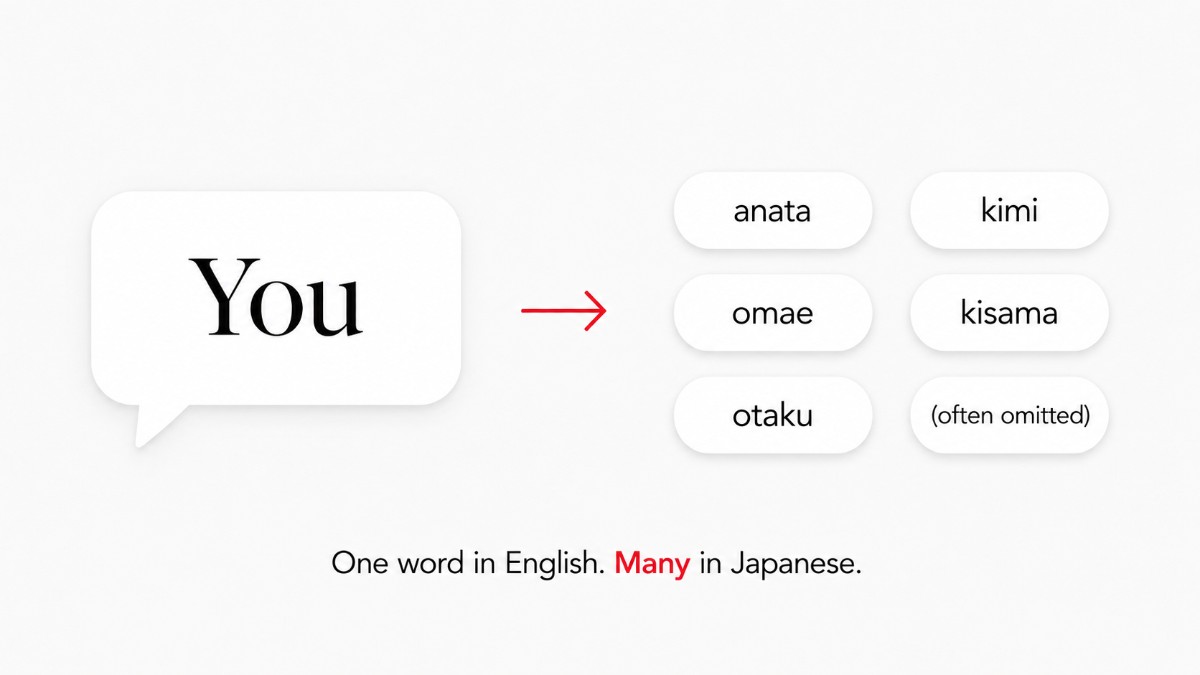
This is not a minor linguistic detail. It affects positioning.
A luxury brand, SaaS company, medical business, restaurant, manufacturer, tourism operator, and recruitment company should not speak to Japanese readers in the same register. Choosing a word that is too direct, too casual, too formal, too promotional, or simply out of date can weaken trust even when the underlying information is correct.
Good Japanese SEO therefore starts with language selection, not keyword insertion. The writer must understand who is searching, what relationship the brand wants to establish, and what vocabulary that audience currently uses.
This is also where culturally aware writing can outperform generic long-form content. A short passage that reflects a current conversation, local concern, familiar phrase, or cultural reference can create more recognition than several paragraphs of perfectly optimized but generic explanation. That recognition can lead to shares, citations, mentions, and backlinks because the reader feels that the content has captured something worth repeating.
The Power of Ma: Why What You Do Not Say Can Matter
Japanese communication often gives more weight to what is implied than English-language marketing does. One useful concept is ma: the interval, pause, or space that allows meaning to develop.
This should not be reduced to a design trick such as adding more white space to a web page. In content, ma can mean leaving a thought slightly open, shortening an explanation before it becomes repetitive, separating key ideas so the reader can absorb them, or trusting the audience to understand an implication without spelling out every conclusion.
Haiku is an extreme example. Its effect comes partly from compression and omission. The reader participates in completing the meaning.
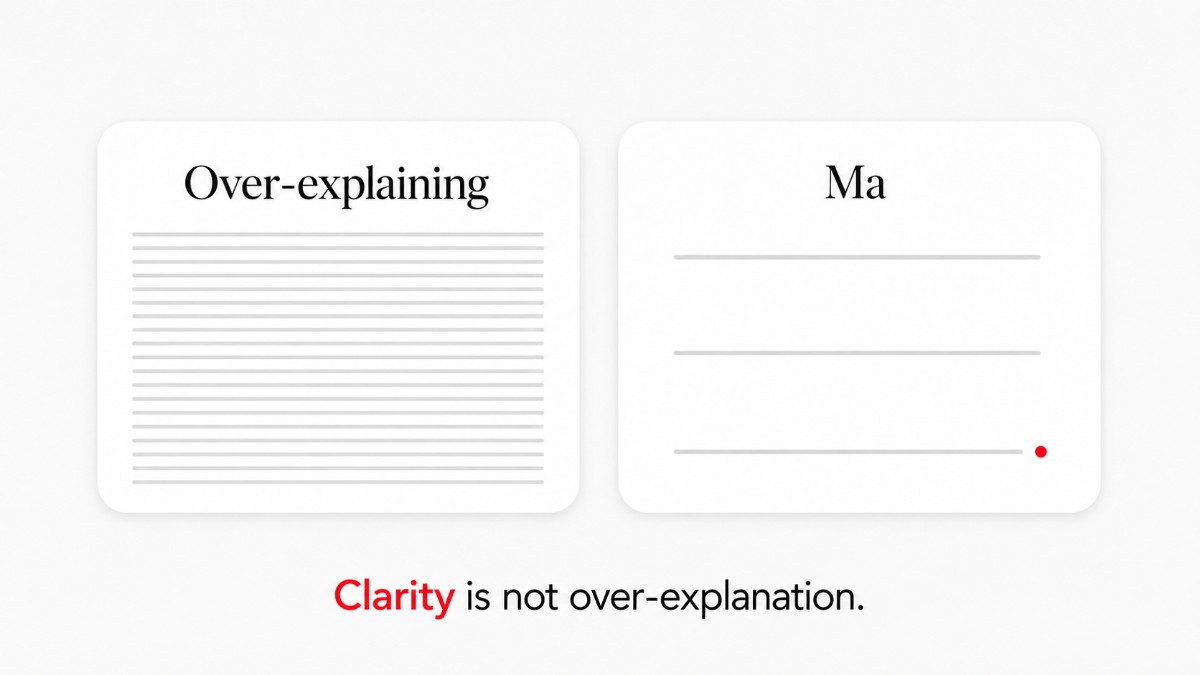
The same principle can improve Japanese digital content when used carefully. Western marketing copy often tries to remove every ambiguity: explain the problem, explain why it matters, explain the benefit, explain the proof, and explain the call to action. In Japanese, excessive explanation can sometimes make a brand sound pushy, unsophisticated, or strangely mechanical.
That does not mean Japanese SEO content should be vague. Search intent still has to be satisfied. Important facts still need to be explicit. The point is that clarity and over-explanation are not the same thing.
Strong Japanese content often answers the searcher’s question clearly while leaving enough linguistic space for the message to feel natural. That pacing can increase engagement because the reader is not being dragged through every conclusion.
How to Do SEO in Japan Depends on What You Sell
There is no universal Japanese SEO playbook. Strategy changes with the product, the buying process, the searcher’s level of knowledge, the competitive landscape, and the role search plays in the final decision.
A foreign B2B software company may need educational pages that translate an unfamiliar category into Japanese business language. A consumer brand may need comparison content, review-oriented content, and pages that connect search demand with social proof. A tourism business may win through highly specific experience queries. A premium product may need fewer pages but stronger authority, storytelling, and trust signals. A local business may need search content that works together with maps, reviews, and location intent.
This is why “publish more articles” is not a strategy.
The right question is: what information must a Japanese customer encounter before this product feels understandable, credible, relevant, and worth choosing?
That question often produces a different site architecture, keyword map, content format, and conversion path for every business.
This Is Also Why AI Has Not Replaced Japanese SEO
AI is useful. It can accelerate research, cluster keywords, generate outlines, compare competitor coverage, and help produce early drafts. But the most valuable part of Japanese SEO is increasingly the part AI struggles to own: deciding which expression fits this specific audience, at this specific moment, for this specific product.
AI tends to move toward statistically safe language. Safe language is often grammatically correct, broadly understandable, and commercially forgettable.
Japanese SEO frequently requires the opposite judgment. You may need to choose a phrase that feels less literal but more native, remove a sentence that an English-speaking marketer considers necessary, use terminology that is currently gaining cultural relevance, or reject a high-volume keyword because its nuance attracts the wrong audience.
The more commoditized basic content production becomes, the more valuable these decisions become.
Japanese Has More Room for the Wrong Meaning
Another difficulty is ambiguity. Japanese contains many homophones, context-dependent expressions, omitted subjects, and words whose meaning changes depending on how they are written or where they appear in a sentence.
Two pages can target roughly the same topic and use semantically related keywords while producing completely different impressions.
This matters because search traffic is not valuable if the language creates friction after the click. A page may rank and still lose the user within seconds if the vocabulary feels too technical, too cheap, too youthful, too old-fashioned, too aggressive, or simply inconsistent with the product category.
For a foreign brand, this is especially dangerous because the problem can be invisible internally. An English-speaking team may see a clean translation and a strong keyword report while Japanese users are quietly bouncing because the tone feels wrong.
Japanese SEO should therefore be judged not only by rankings and sessions, but also by whether the wording keeps the right users moving through the page.
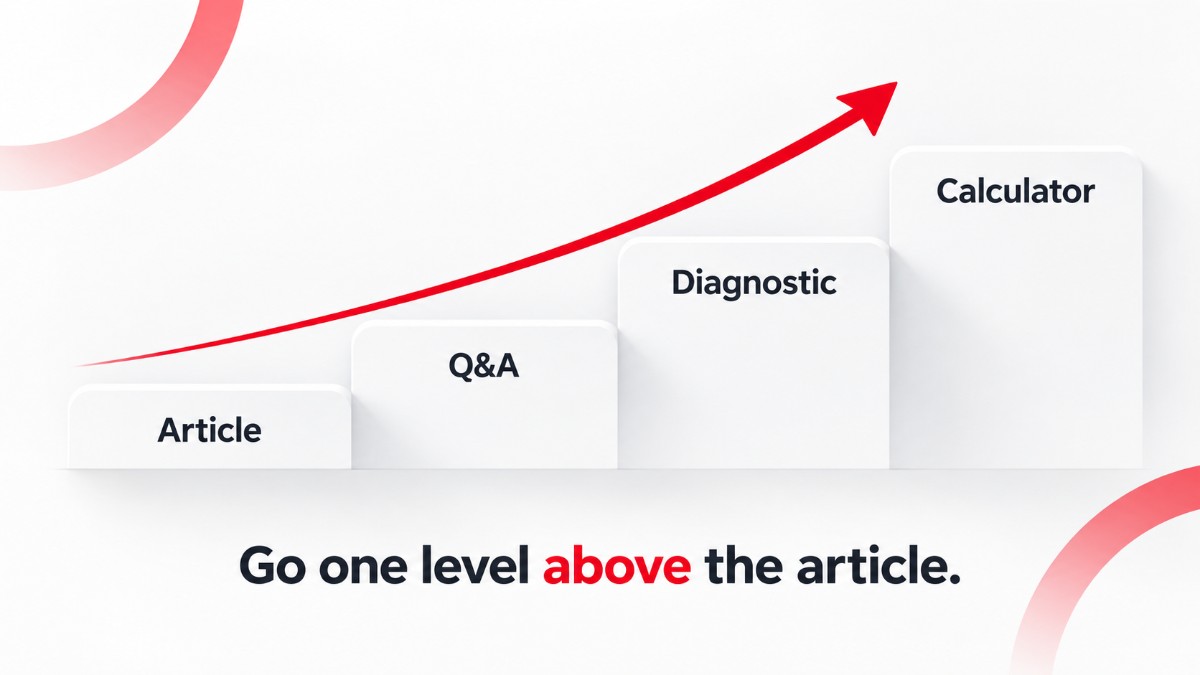
Modern SEO Needs to Go One Level Above the Article
Text still matters, but text alone is becoming harder to sustain.
A searcher who lands on a page with 2,500 words of uninterrupted explanation may get the answer they need, but they may also lose interest before reaching the conversion point. If every competitor is publishing similar long-form articles, adding another article is not enough to create a meaningful advantage.
The next step is to turn SEO content into an experience.
Build Content People Can Use, Not Only Read
Depending on the product, this can include:
- Interactive Q&A that changes the next question based on the user’s answer.
- Diagnostic tools that recommend a product, service, plan, market, or next action.
- Calculators that convert complex pricing or cost structures into a personal estimate.
- Comparison tools that help users narrow several options into one relevant choice.
- Decision trees that turn a difficult topic into a clear sequence of actions.
- Assessments that provide a result the user can save, share, or discuss internally.
These formats do more than improve time on page. They make the page itself more useful.
That distinction matters. A traditional SEO article asks the user to consume information. An interactive SEO asset helps the user make a decision. When done well, it can improve engagement, create stronger brand recall, earn links, generate first-party behavioral data, and move visitors closer to conversion without forcing them into an immediate sales inquiry.
For many categories, this is what content marketing in Japan should now mean: not simply writing more, but designing a better search experience.
How to Choose a Japan SEO Company
If you are looking for an SEO company in Japan, English communication is important. It is also only the minimum requirement.
A Japan SEO company should be able to understand your business goals, explain local search behavior in English, communicate what is being changed, and help your global team make decisions without losing meaning between languages.
But a bilingual account manager does not automatically make a strong Japan SEO agency. The way you evaluate them mirrors how foreign brands should choose a local partner in Japan.
The harder question is whether the company can build a strategy that actually fits your product in Japan.
| What to evaluate | Minimum standard | What actually differentiates a strong partner |
|---|---|---|
| Communication | Can communicate clearly in English and Japanese | Can preserve your original business intent while explaining when the Japanese market requires a different approach |
| Keyword research | Can produce Japanese keyword volumes and rankings | Understands nuance, search intent, register, cultural context, and which seemingly relevant keywords may attract the wrong audience |
| Content | Can write native Japanese articles | Can choose the right voice for the product and create content that feels current, credible, and worth citing |
| Strategy | Can provide a standard SEO roadmap | Changes the roadmap according to the product, customer journey, market maturity, and conversion model |
| Execution | Can publish and optimize articles | Can design search experiences one level above articles, including Q&A, diagnostic content, calculators, and other interactive tools |
| AI use | Uses AI to improve efficiency | Knows which decisions should not be delegated to AI and applies human judgment to language, culture, and positioning |
If you are comparing a Japanese SEO company, a Japan SEO company, or a Japan SEO agency, ask to see more than ranking reports. Ask how the team would change its approach if your product, target customer, price point, or level of market awareness changed.
Then ask what they would build if publishing another article was not enough.
The quality of those answers will tell you far more than a list of standard deliverables.
Japanese SEO Is a Market Strategy, Not a Translation Task
SEO in Japan is still valuable because Japanese consumers still use text to understand, compare, validate, and discuss products. But the opportunity is not simply to translate English content into Japanese and reproduce the same SEO system.
Japanese SEO depends on language judgment: the right word, the right register, the right amount of explanation, and sometimes the right amount of silence.
It also depends on commercial judgment. The strategy for a foreign software company should not look like the strategy for a restaurant, luxury brand, tourism experience, manufacturer, or consumer product. There is no universal template.
And as AI makes basic article production cheaper, the competitive advantage will move further toward the work that requires context: cultural interpretation, strategic prioritization, editorial judgment, and interactive experiences that help users do something rather than simply read something.
If you want to know how to do SEO in Japan, start with a better question: what would make a Japanese customer feel that this brand understands both the problem and the market?
That is the standard your SEO strategy should meet.
Looking for an SEO Partner in Japan?
JDOC helps overseas brands build SEO strategies for the Japanese market, from keyword and content planning to Japanese-language execution and interactive search experiences.
We do not begin with a fixed article package. We begin with the product, the audience, and the role search needs to play in the buying journey. From there, we design the Japanese SEO approach that fits the business.
If you are entering Japan, rebuilding an underperforming Japanese site, or looking for an SEO company in Japan that can work with an international marketing team, talk to JDOC about your market, product, and current search challenges.